Our scientific approach is grounded in a deep understanding of corneal biology, disease pathophysiology, and the regenerative processes required to preserve vision.
Central to this approach is oremepermin alfa, a recombinant form of human deleted hepatocyte growth factor (dHGF), an endogenous human protein that plays important roles in the eye by promoting epithelial regeneration and cell survival, regulating inflammation and promoting tissue repair. The maintenance of corneal clarity and visual function depends upon the precise coordination of these biological processes. Disruption of this balance contributes to vision loss.
By harnessing the pleiotropic biological activities of oremepermin alfa, we are developing a topical biologic therapy that, via a convenient eye drop, is designed to promote corneal regeneration while inhibiting the inflammatory and fibrotic pathways that drive disease progression. In the cornea, coordinated regulation of these processes is essential to preserving epithelial integrity, corneal transparency, and vision.
Oremepermin Alfa:
- Promotes Limbal Epithelial Stem Cell and Transit Amplifying Cell Proliferation and Differentiation
- Anti-apoptotic - promotes cell survival
- Inhibits Inflammation
- Anti-fibrotic - inhibits scar formation
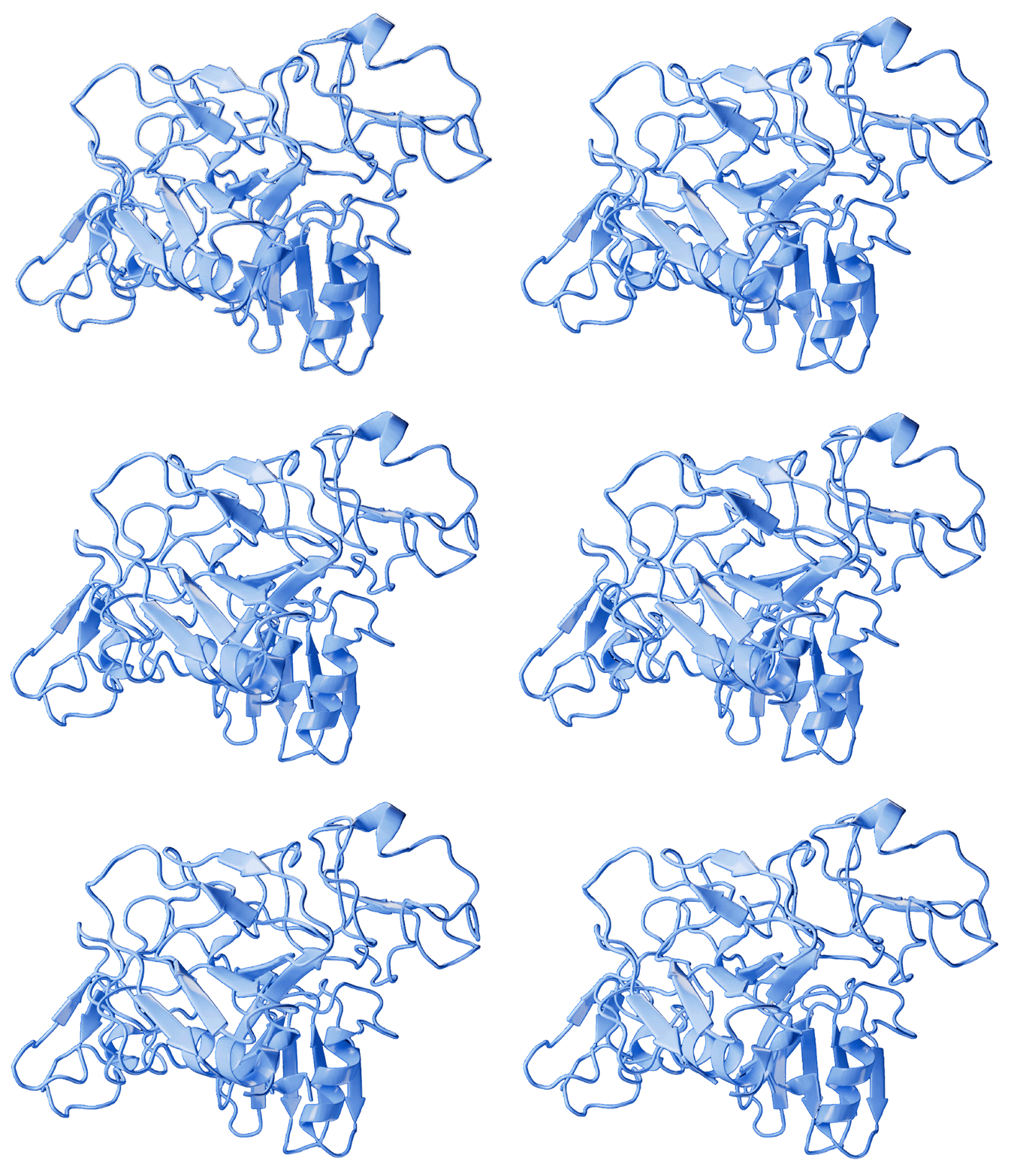
An Approach with Multiple Mechanisms of Action
Oremepermin alfa has broad biological activity that engages multiple molecular pathways relevant to treating limbal stem cell deficiency (LSCD). By supporting limbal epithelial stem cell health, it accelerates corneal epithelial regeneration while delivering anti-inflammatory, anti-fibrotic, and pro-cell-survival activity.
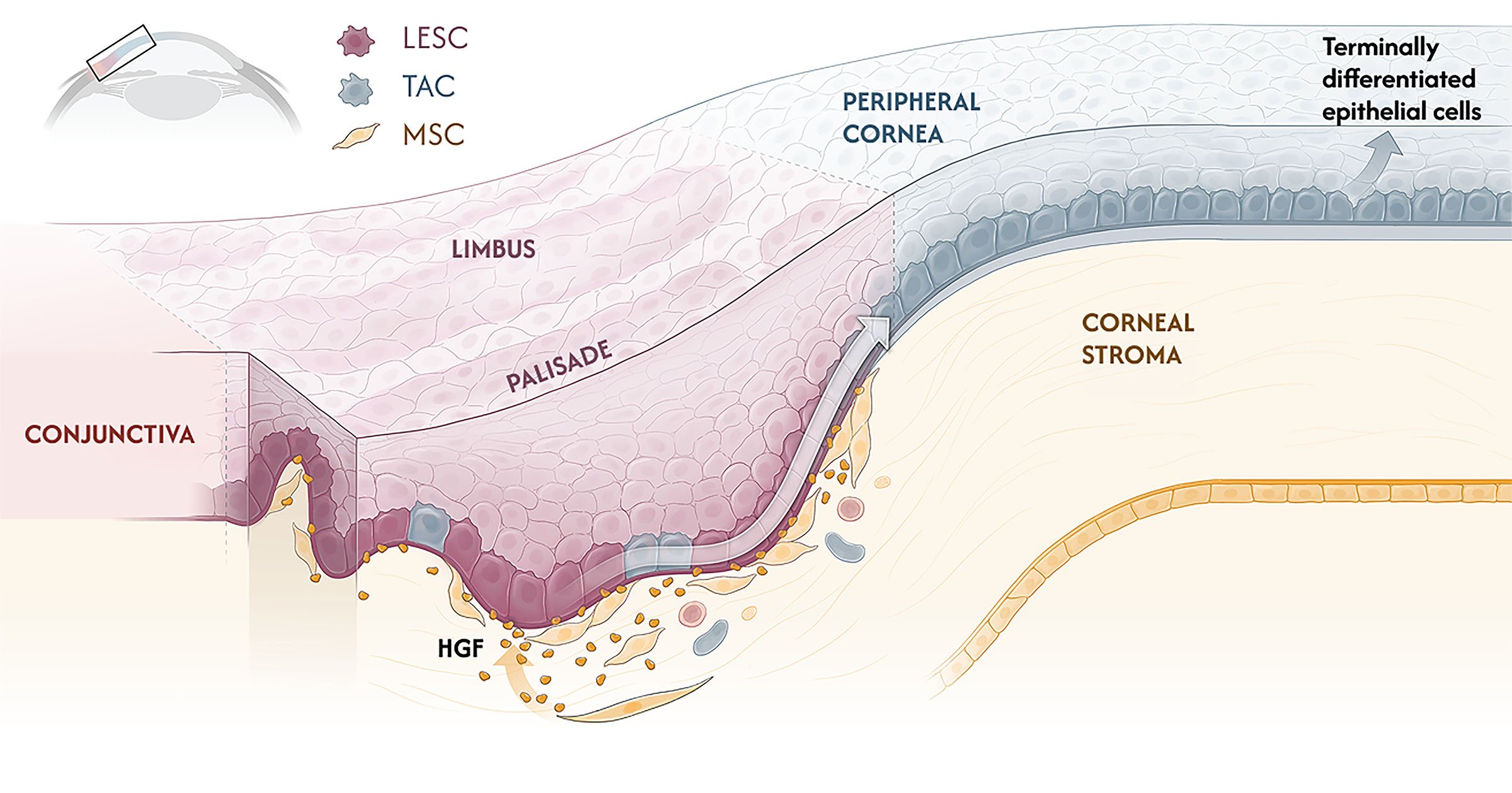
dHGF (oremepermin alfa) binds to c-Met on limbal epithelial stem cells (LESCs) and early transient amplifying cells (TACs)
LESCs divide into TACs which migrate centrally, divide, and differentiate
Proliferation and differentiation of LESCs leads to replacement of lost cells on the corneal surface